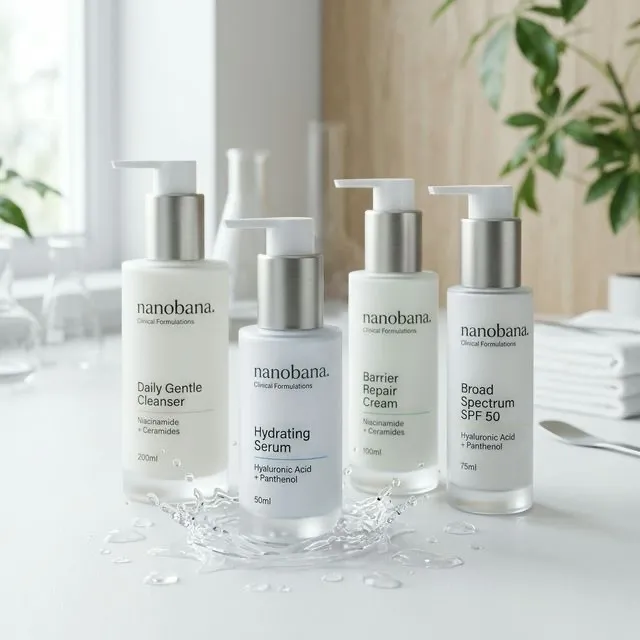
Custom Compound Creams
compoundedNot FDA-approved. Compounded by licensed pharmacies based on a provider's prescription. Individual ingredients may be FDA-approved in their standalone forms.
Est. Cost
$20 - $60/mo
Custom compound creams are prescription formulas prepared by licensed pharmacies based on a provider's specific instructions. These formulas can combine multiple active ingredients — such as tretinoin, niacinamide, azelaic acid, hydroquinone, or tranexamic acid — in concentrations tailored to a patient's individual skin needs. This approach allows providers to address multiple concerns (fine lines, dark spots, acne, texture) in a single product, which can simplify a skincare routine.
Dosage Format
Applied once daily, typically in the evening. Specific instructions vary by formula. Providers generally recommend starting slowly and increasing frequency as tolerated.
Type
Compounded
Who to discuss it with
People with multiple skin concerns who want a single product combining several prescription-strength actives
Key distinction
Custom compounds allow providers to combine multiple active ingredients in one formula — something that is not typically available in standard FDA-approved products.
Where to Get Custom Compound Creams
Provider listings related to custom compound creams. Confirm the exact formulation, current availability, and full price directly.
Curology
Custom 'Superbottle' formula. Ingredients may include tretinoin, azelaic acid, niacinamide, clindamycin, and more.
$20 - $30/mo
Agency
Anti-aging focused custom formulas. May include tretinoin, niacinamide, tranexamic acid, and azelaic acid.
$25 - $50/mo
Hers
Custom anti-aging cream with tretinoin and niacinamide. Concentrations tailored by provider.
$35 - $45/mo
Hims
Anti-aging cream with tretinoin, azelaic acid, and niacinamide. Custom dosing.
$30 - $45/mo
How Custom Compound Creams Works
The mechanism depends on the specific ingredients included in the formula. Tretinoin accelerates cell turnover and promotes collagen production. Niacinamide may support the skin barrier and help reduce redness. Azelaic acid may address both pigmentation and mild acne. Hydroquinone inhibits melanin production to lighten dark spots. Tranexamic acid may help with melasma by reducing melanin transfer. By combining these ingredients at customized concentrations, a single compound cream can potentially target multiple pathways simultaneously. Your provider selects the ingredient mix and strengths based on your skin assessment.
Side Effects
Common
- • Dryness and peeling (especially if tretinoin is included)
- • Mild redness or irritation during the adjustment period
- • Increased sun sensitivity
- • Mild stinging on application
Serious risks and warning signs
- • Allergic reaction to any ingredient — discontinue and contact your provider
- • Excessive irritation, blistering, or skin damage — seek medical attention
- • If hydroquinone is included: ochronosis (darkening) with prolonged use is rare but possible
- • Tretinoin-containing formulas should not be used during pregnancy
Eligibility to Discuss With a Clinician
Custom compound creams are generally prescribed to adults with various skin concerns including aging, hyperpigmentation, acne, or uneven texture. Your provider will assess whether compounding is appropriate based on your health history and skin needs. These formulas may not be suitable for pregnant or breastfeeding individuals (depending on the ingredients), or for people with very sensitive or compromised skin.
Related Medications
Provider Reviews
Explore providers in the skin care category. This does not mean every provider offers Custom Compound Creams; check the exact product with the provider.